Global · Entertainment
The New Cultural Silk Road
America's grip on worldwide popular culture is loosening. New technology is pushing the globalisation of entertainment into reverse, and the implications are huge.
9 July 2026

For a century, popular culture had a capital, and it was American. That grip is loosening. According to The Economist, new technology is pushing the globalisation of entertainment unexpectedly into reverse: the same recommendation engines that once exported Hollywood everywhere are now feeding people more of what is made next door.
The charts are turning local
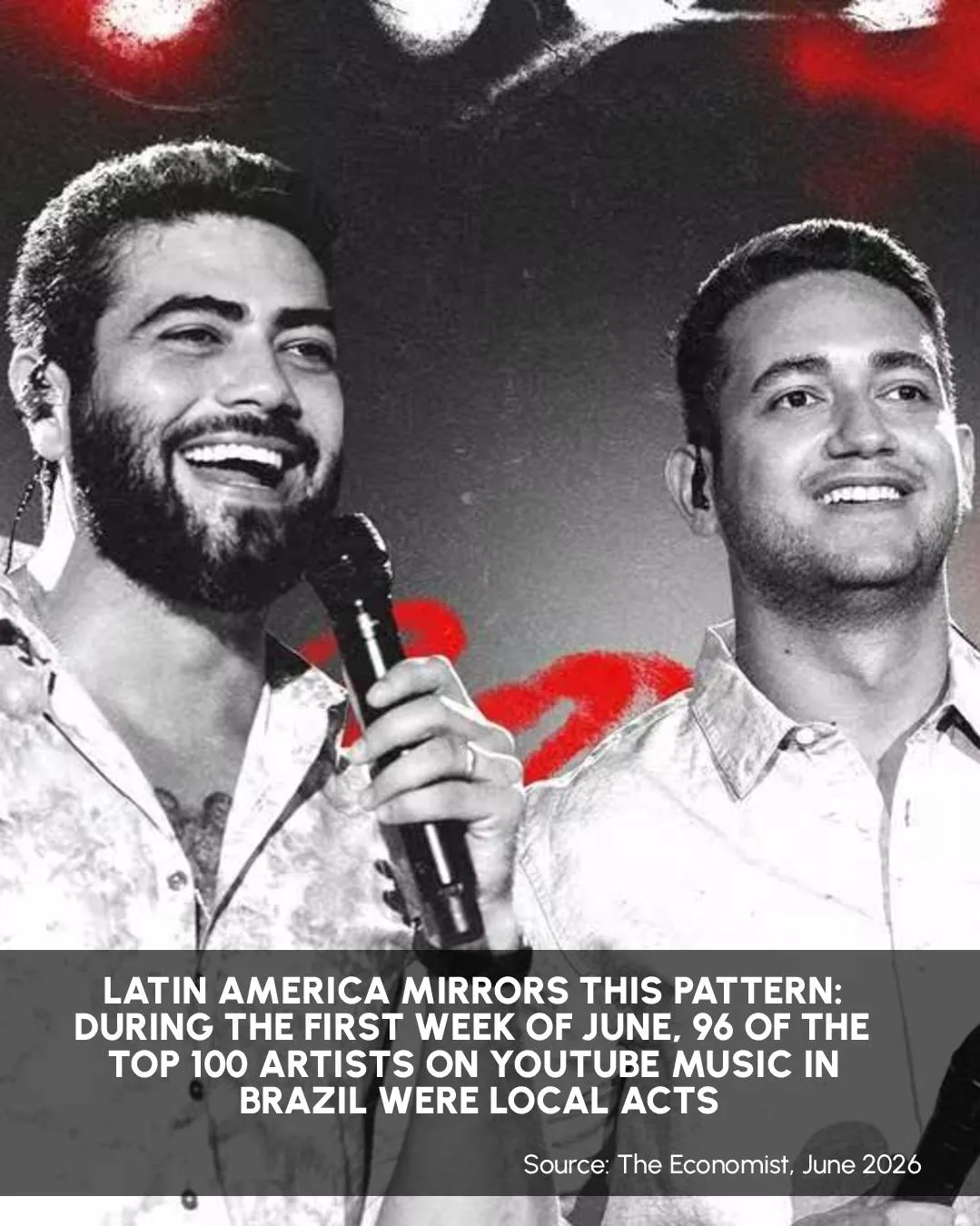
The music data is striking. In 2019 only five songs in Denmark’s top 20 were in Danish. By last year the figure was 18. Latin America mirrors the pattern: during the first week of June, 96 of the top 100 artists on YouTube Music in Brazil were local acts. Shifted industry economics reward staying local too. Live shows drive revenue now, and domestic touring is far cheaper than travelling worldwide.
The same trend on screen
Television is following. American content is losing its hold on global viewers, with US shows’ share of worldwide TV demand sliding from 51 percent in 2022 to 42 percent last year. Meanwhile anime has become a durable American youth-culture category, outpacing the NFL among global Gen Z, with US viewership more than doubling since 2020. Culture is not flowing one way across the Atlantic anymore. It is flowing every way at once.
Authentically local wins
The irony is that the best chance of a global hit is now to make something authentically local. Adolescence found worldwide success because of, not despite, its gritty British identity. This is what we call the New Cultural Silk Road: a multipolar trade in stories, sounds and style, with new centres of gravity emerging far from the old capitals. The implications are huge. Are you ready for the shift?