New York · Advertising
Who the Joke Is Working For
A gallery of fake tech companies has taken over a New York newsstand. The parodies work because the gap between a tech ad and a joke about one has almost closed.
10 August 2026
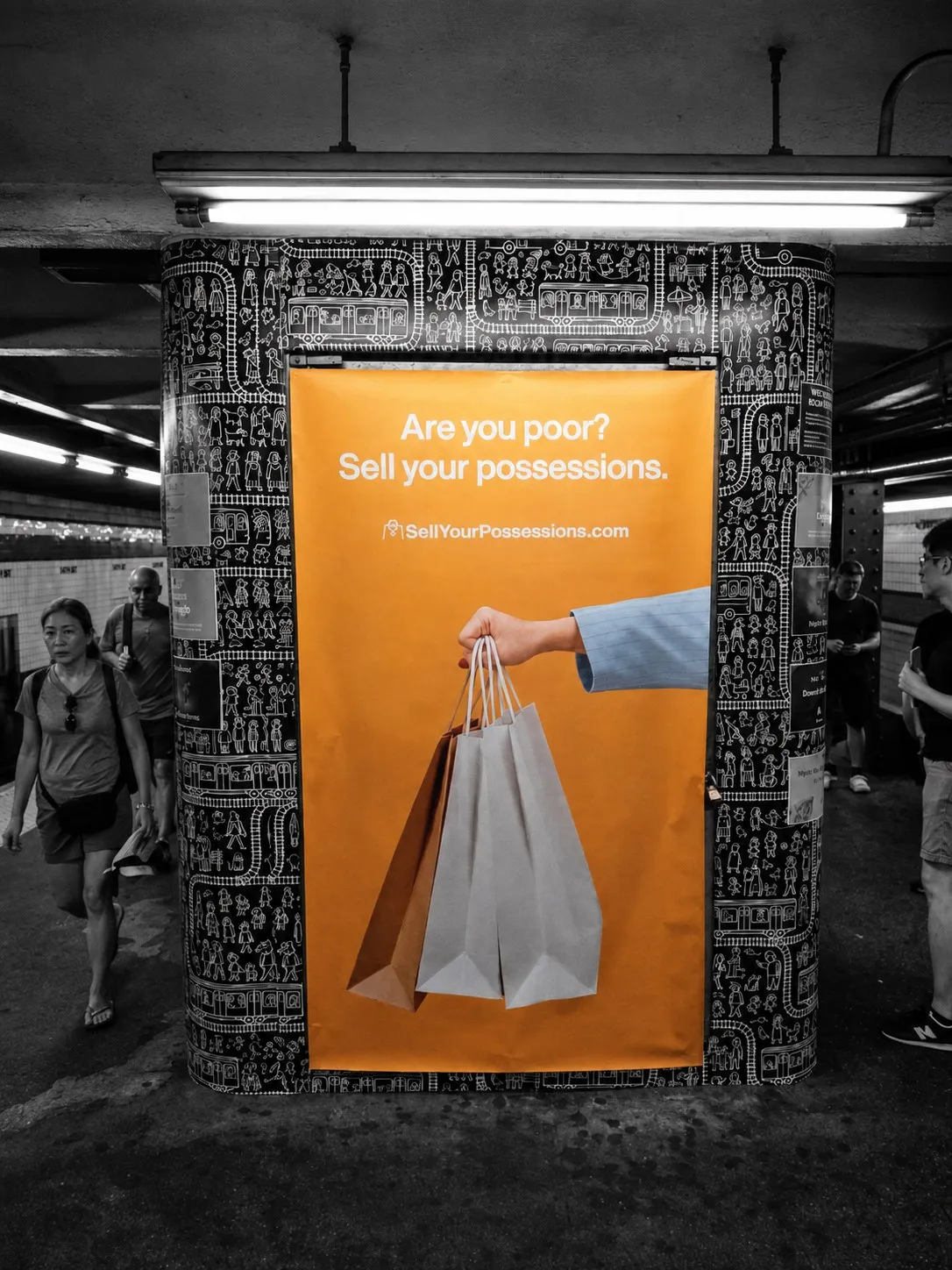
A former newsstand at the West 4th subway station in New York has become a pop-up gallery of companies that do not exist. Cutlery.ai asks what if forks were spoons. UpsideDownTexas.AI asks what if Texas was upside-down. A poster for Grandfather offers the world’s first wearable AI grandfather, photographed as a glowing white pod with a beard.
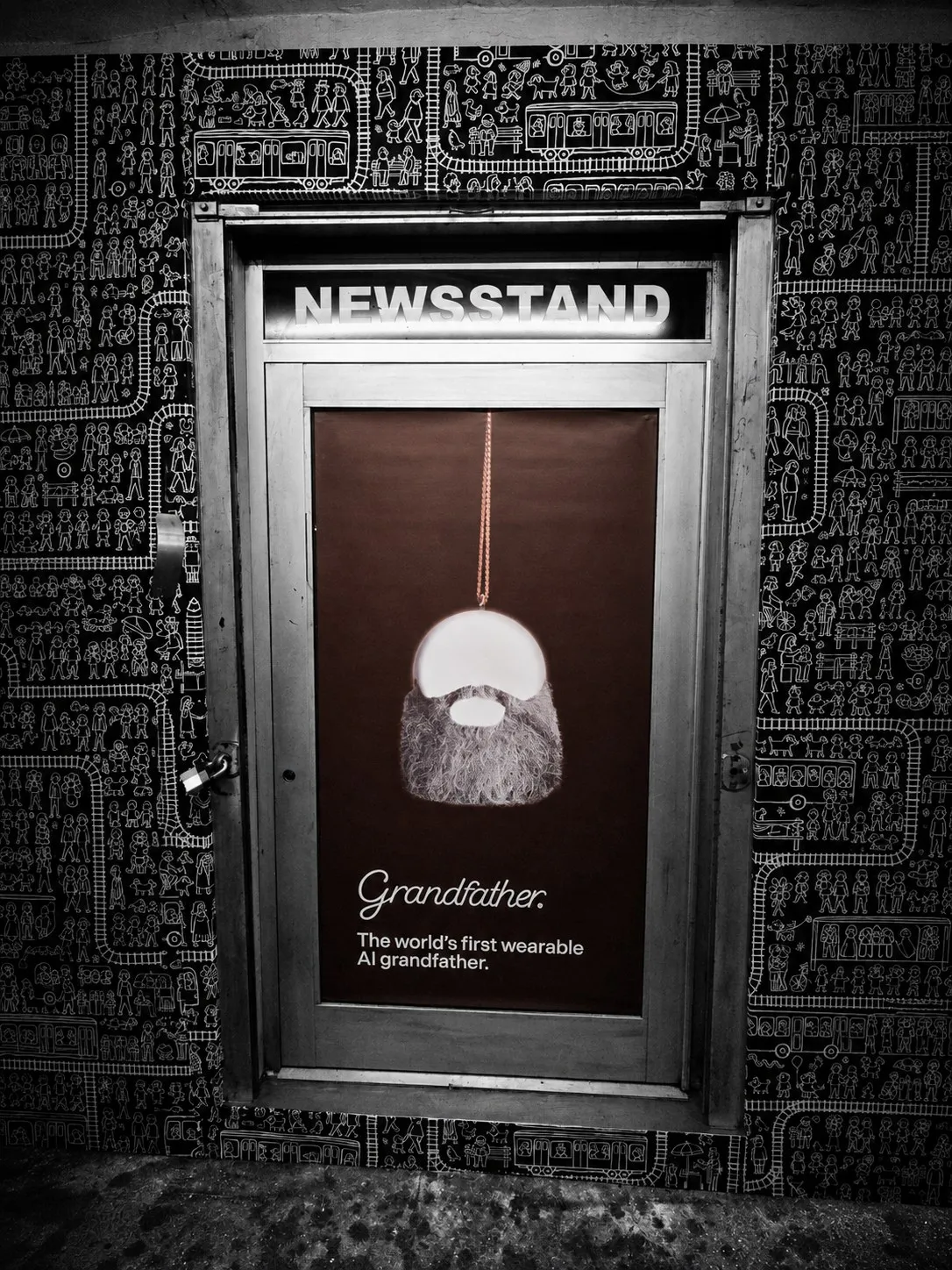
The installation was built by the comedians Harris Alterman and Dave Ross, after their fake tech ads on the subway went viral. The jokes work because they need almost no exaggeration. “It’s so obviously nonsense, but it also does sort of feel like what a lot of these companies are saying to you,” Ross said. MeetGravy HR promises to hire everyone on Earth without doing anything. It takes a second look to be sure that one is invented.
The joke used to be on advertising
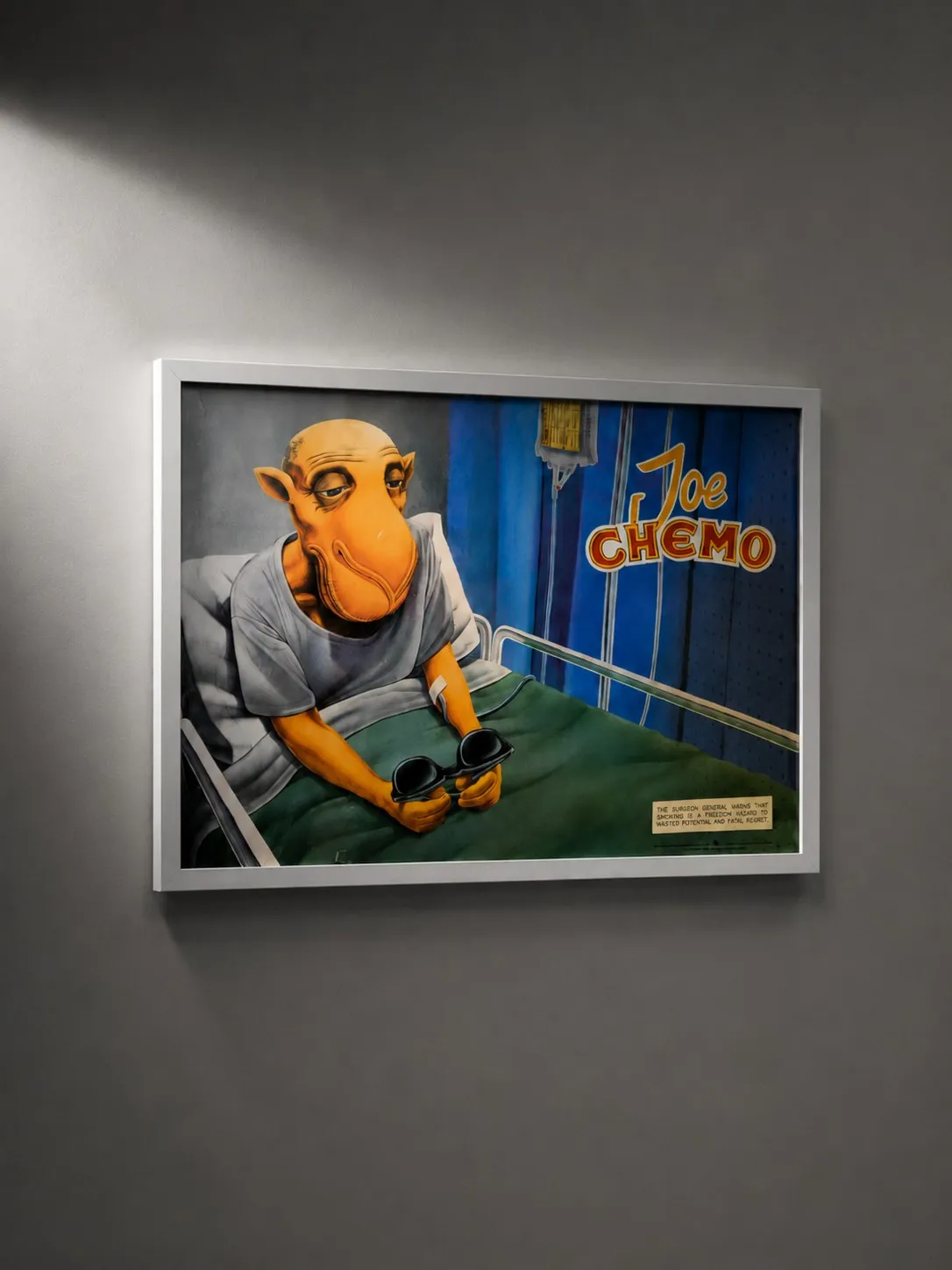
Making advertising the butt of the joke is not new. Through the 1980s and ’90s, culture jamming gave Adbusters and others a method: hijack the visual language of brands and turn their own messages against them. Joe Chemo, a sagging camel in a hospital bed, borrowed the swagger of a cigarette mascot and pointed it at the ward.
That work assumed a clean division of labour. Brands did the selling and the parody did the exposing. The division no longer holds. Old Spice put a man on a horse and made the absurdity the point. Oatly bought a billboard to announce another ad for its oat drink providing no reason at all why you should try it. Surreal ran “Please buy our cereal” in Comic Sans and admitted, in a line underneath, that the typeface was chosen to provoke people who work in marketing.
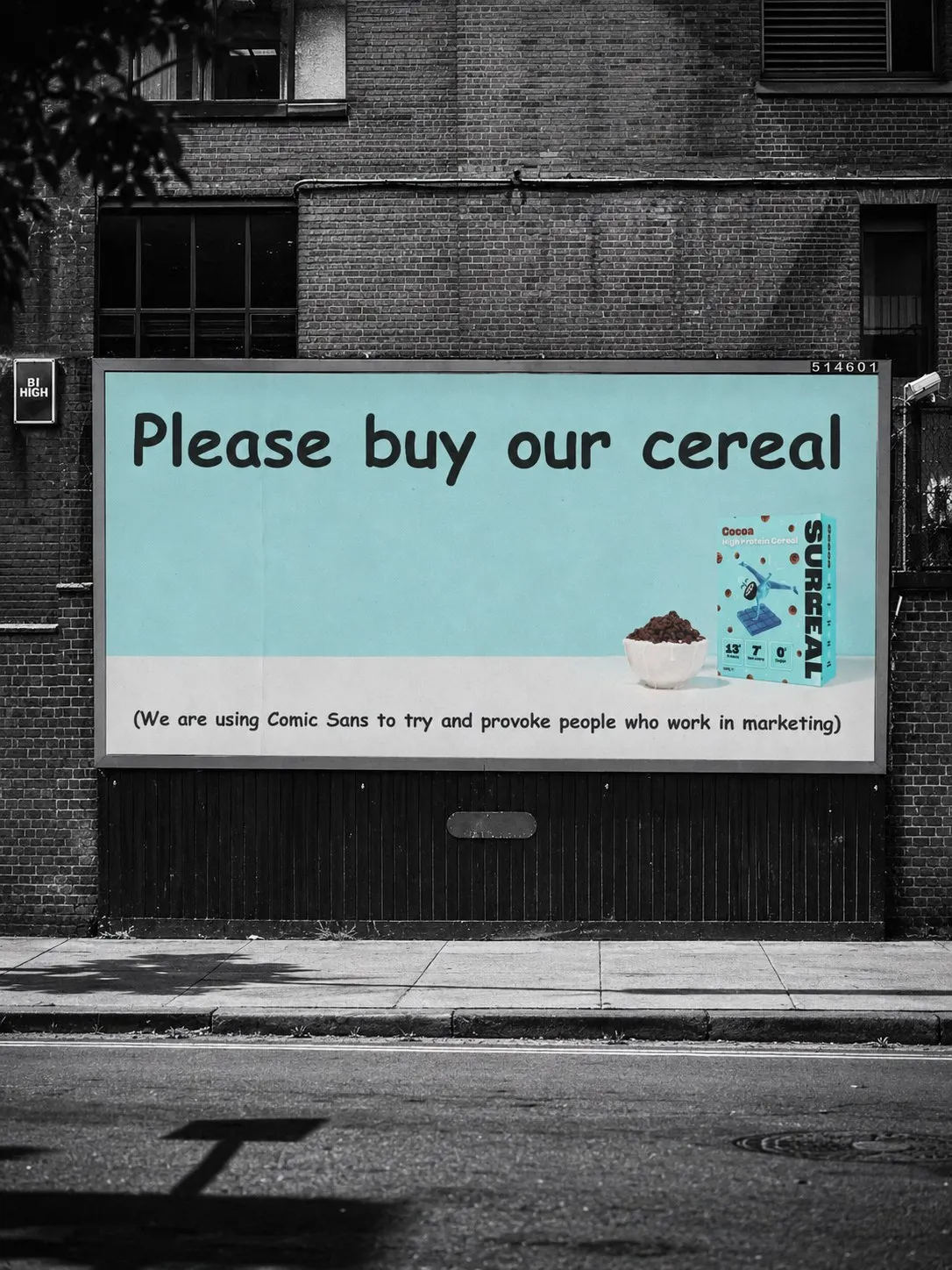
Anti-advertising became an advertising strategy.
Why the mask came off
There is a logic to the shift. Edelman’s 2025 Trust Barometer found that 61 percent of people globally hold moderate or high grievance toward institutions, and 54 percent of Americans say personalised ads creep them out. Among 18 to 34s, sarcasm and irony now rank among the most popular forms of advertising humour.
Sincerity turned into a liability. A brand that speaks earnestly invites the audience to hunt for the manipulation underneath, and that audience is fast and well practised. A brand that opens by admitting it wants your money leaves nothing to catch it doing. Self-awareness is not a confession any more. It is a defence.
The audience is in on it too
None of this means the pitch stopped landing. Fifty-seven percent of Gen Z say ads help them decide what to buy. Liquid Death built a business by printing the insults its own posts attract, then buying a Times Square screen to run a five-star review about screaming at a tea launch. The scepticism is real and the purchase happens anyway.
We learned to see through advertising, and advertising learned to use that too. The fake tech ads at West 4th are the sharpest work in the station because they say what the real posters imply and stop there. When the best parody of advertising looks exactly like advertising, the question is not whether the joke worked. It is who the joke is now working for.